Overview
On 15 May 2026, authorities in the Democratic Republic of Congo (DRC) and Uganda declared an outbreak of Ebola disease caused by the Bundibugyo virus after cases were confirmed in both countries. The World Health Organization (WHO) subsequently determined this Ebola outbreak constituted a public health emergency of international concern.
As of 23 June 2026, the DRC reported more than 1,100 confirmed cases of Ebola, including almost 300 deaths, with 20 confirmed cases reported in Uganda, including 2 deaths.
WHO has assessed the risk of Ebola disease to be very high at the national level for the DRC, and high for Uganda and neighbouring countries sharing land borders with the DRC or Uganda.
There have been two previous Ebola disease outbreaks caused by the Bundibugyo virus: Uganda in 2007 and the DRC in 2012.
Australia's humanitarian assistance
On 4 June 2026, Australia announced AUD$5 million to support the global response to the Ebola outbreak, and to help prevent the spread of the disease.
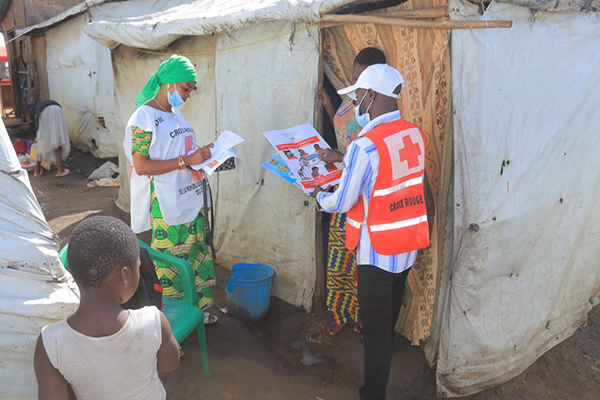
Australia's funding – directed through the International Federation of the Red Cross (IFRC) and the WHO – has provided medical care and supplies, water and sanitation services, outbreak surveillance and preparedness, and strengthened local health systems.
Australia also contributes to the UN's Central Emergency Fund (CERF), a global fund that enables humanitarian partners to provide life-saving support and protection to people in need through rapid responses and support to underfunded crises. The CERF has allocated USD$60 million (approximately AUD$87 million) for the response to this crisis.
Australia is supporting urgent work to develop a vaccine for the virus through our contribution to the Coalition for Epidemic Preparedness Innovations, which has allocated USD$61.8 million (approximately AUD$90 million) to fast-track work on three experimental vaccine candidates.
How you can help
Managing donations of goods often increases the burden on local relief authorities and creates costs for affected countries in transport, warehousing and distribution.
For those wishing to make a personal contribution to the response efforts, a summary of Australian Council for International Development (ACFID) members with fundraising appeals is listed on the ACFID website.
For more information on how to donate responsibly, please read: Donate Responsibly [PDF]
Travel advice
The Australian Government's Smartraveller travel advice for the Democratic Republic of the Congo (DRC) and Uganda provides advice on the latest health risks, including Ebola disease. The Australian Government's travel advice can be accessed at Smartraveller.gov.au, including information on health risks and health screening border measures overseas.
Australians are encouraged to read and subscribe to travel advice for all destinations they plan to travel to or transit through, as well as Smartraveller news updates, updated advice on infectious diseases, and Smartraveller social media, to receive the latest updates throughout their travel.
Consular assistance
Australians in need of emergency consular assistance should contact the Australian Government 24-hour Consular Emergency Centre on:
- +61 2 6261 3305 (overseas)
- 1300 555 135 (in Australia).
Media release and statements
Joint media release from Senator the Hon Penny Wong, Minister for Foreign Affairs and The Hon Dr Anne Aly MP, Minister for International Development, Minister for Small Business, Minister for Multicultural Affairs: Support for global response to Ebola: 4 June 2026.