
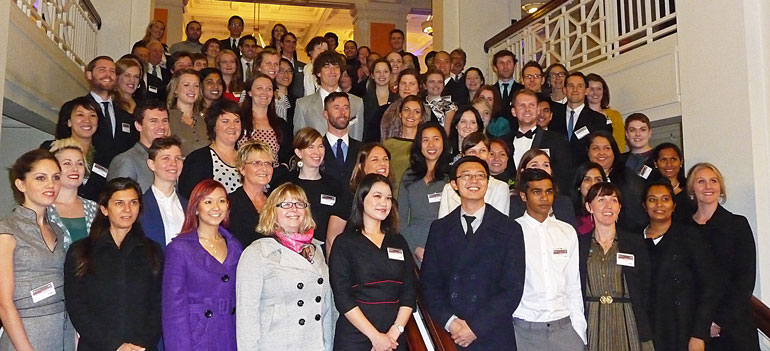
The latest group of AVIDs are heading to 21 developing countries. Photo: AusAID
The Hon Dr Andrew Leigh MP, Federal Member for Fraser, farewelled more than 100 Australian volunteers in Canberra last night as part of the Australian Volunteers for International Development (AVID) program.
The latest group of AVIDs are heading to 21 developing countries to help with health, education, water and sanitation, and private sector developments ranging from a few months to three years.
Australian volunteers come from a diverse range of backgrounds and include women and men aged from 18 to 80.
Some of the skilled AVIDs in this group include a community forestry development officer for Laos, a gender program specialist for Timor-Leste, a social worker and trainer for Vietnam, a business management teacher trainer for Mongolia and an occupational therapist trainer for Fiji.
Australian volunteers have varying professional backgrounds which enable them to work on a range of activities including setting up medical clinics so that women can give birth safely, building stronger homes to withstand cyclones and helping children with disabilities to get to school.
His Excellency Mr Bold Ravdan, Mongolia's Ambassador to Australia, joined in the farewell celebrations at Old Parliament House in Canberra, which included six AVID volunteers being deployed to Mongolia.
Australia has a proud history of volunteering. In 2012–13 the Australian Government will support more than 1,800 volunteers in 36 developing countries in Asia, the Pacific, the Middle East and Africa, Latin America and the Caribbean as part of our overseas aid program.
A recent survey of returned volunteers who participated in AusAID-supported volunteer assignments between 2006 and 2011 found that overwhelmingly volunteers returned from their assignments feeling satisfied with the difference they have made in their overseas communities, positive about personal and professional benefits they receive and more knowledgeable about other cultures and Australia's contribution to the region. The survey also found that they shared this understanding with their communities back in Australia, and often continued to work in the field of poverty reduction long after their volunteer assignments have ended.