Reproductive and sexual rights are human rights. They include the right to make free and responsible reproductive health choices and have the information and means to do so, without discrimination, coercion and violence; the right to have the highest standard of sexual and reproductive health, and equitable access to services; the right to live free from violence; comprehensive sexuality education; and the right to safely express diversity of sexual orientation and gender diversity.
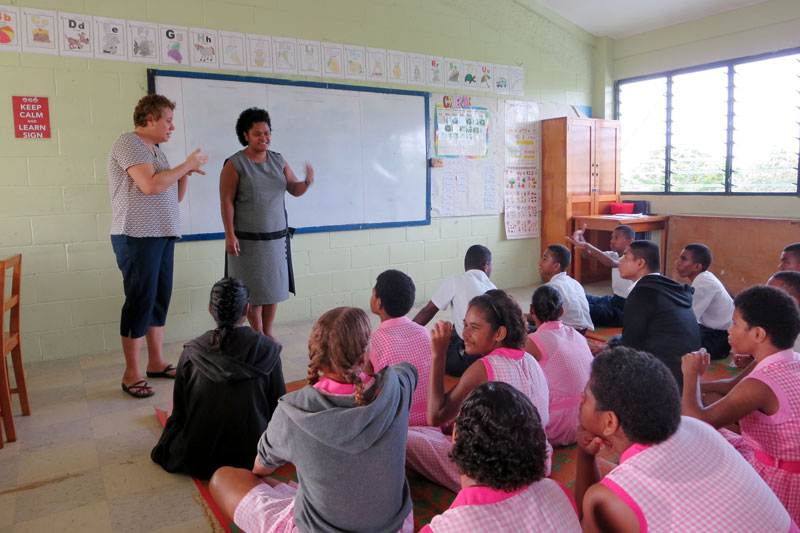
Family Planning NSW works in the Pacific to advocate for, and uphold, these rights for everyone. Their work focuses on the most under–served people. Since 2015, their partners have provided information and education promoting reproductive and sexual health (RSH) and rights to 1,200 people with disability. In Fiji, 57 teachers, nurses, program officers and peer educators are being trained to provide inclusive reproductive and sexual health services to people with disability. In Timor-Leste, 34 peer educators are participating in disability awareness training. In Vanuatu, community education activities are promoting the rights of young people to access contraception. In 2016-17, 1018 women under 25 years – living on some of the most remote islands – received family planning services delivered through outreach clinics.
These projects provide customised capacity building to nurses, doctors and community workers to enable them to address local areas of reproductive and sexual health need. Training covers a range of topics including contraception, sexually transmissible infections, pregnancy options, cervical cancer screening, menopause, sexuality and disability, sexual health education for primary or secondary schools, and community education and group facilitation skills development.
Family Planning NSW is supported by the Australian Government through the Australian NGO Cooperation Program.