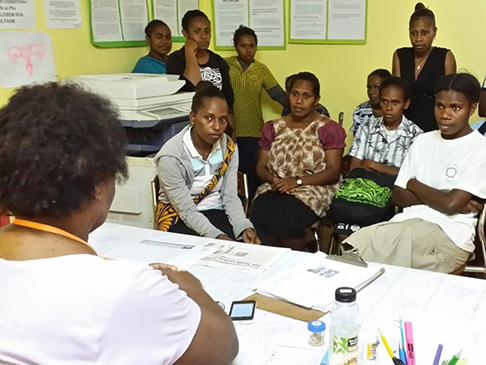
Family Planning NSW's project in Vanuatu aims to increase awareness of family planning, contraception and safe sex, including use of condoms, among young people aged 14 to 25 years, and provide a range of family planning clinical services to young people through fixed clinics and outreach services.
Currently the consequences of pregnancy and childbirth are the leading causes of death, disease and disability in women of reproductive age in developing countries, with Pacific nations having some of the worst reproductive and sexual health statistics globally.
Women in Vanuatu continue to live at risk of unintended pregnancies and although some of them are conscious of the physical and socioeconomic values of using family planning, many still fail to use contraception. According to a 2015 research paper on induced abortion conducted by Vanuatu Family Health Association (VFHA), reasons include contraceptives not being available in the area, a lack of information and a fear of side effects. The unmet need for family planning exposes women to unintended pregnancy and potentially unsafe abortion.
Nurses and community educators are working to raise awareness in schools and communities, including church youth groups, prison inmates, and students at colleges, and have travelled to reach isolated communities. More than 2,500 people have been provided with contraception so far, and the project aims to provide family planning clinical services to 5,500 people aged 14–25, living in rural areas, including people with disability this year.
This project is led by Family Planning NSW and is funded through Australian Aid from the Australian NGO Cooperation Program (ANCP).
In 2015-16 through the ANCP, Australian Aid supported 18 NGOs to deliver 53 projects in 28 countries focusing on health and education.