
Situated off the western coast of North Sumatra, the island of Nias ranks amongst the poorest areas in Indonesia. Seventeen percent of people live below the national poverty line – nearly double the national average. Poverty is a significant contributor to food insecurity and malnutrition. Incomes are insufficient to meet basic household needs, including clean water and sanitation, basic healthcare and adequate nutrition.
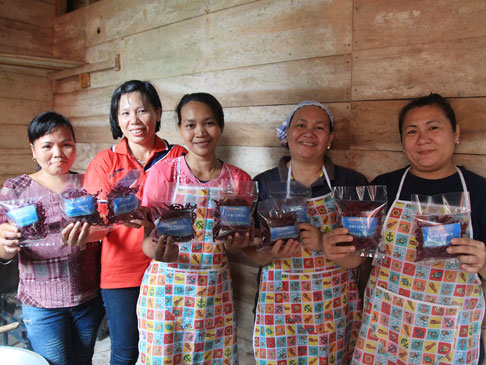
Photo credit: Rocky.
With the support of the Australian NGO Cooperation Program (ANCP), SurfAid is helping translate national-level policies and initiatives to local contexts. Working side by side with communities, and within existing government structures, tailored projects are increasing food security and improving nutrition by diversifying food sources, increasing household income and supporting nutrition sensitive health and sanitation activities.
Working closely with 21 community health groups, SurfAid has supported the development of small businesses including catfish, chicken, snacks, chilies, cocoa and corn. The business groups, selected for their demonstrated leadership capacity in previous SurfAid MCH projects, are mostly women. SurfAid assistance comes in the form of continuous coaching, technical support, business training and marketing guidance, which are all based on specialised market chain assessments specific to Nias.
"The technical training, coaching and supervision by SurfAid enables us to start economic activities on our own," says Nibenia Laoli, a community health volunteer in Dima village.
By working with community groups, SurfAid facilitates collaboration between farmers, improving the profitability of their businesses and maximising learning opportunities. Training and coaching, based on the Farmer Field School approach – a United Nations developed technique – facilitates bottom-up learning. It is a group-based learning process where farmers share their observations and analyse together with a SurfAid facilitator/agricultural specialist on how to optimise their results.
This project complements SurfAid's ongoing efforts to combat intergenerational food insecurity and malnutrition in villages where nearly one in four children are underweight and plain rice is the current dietary staple. Recent results show that malnutrition status has decreased from 7% to 0.4%. The project also supports Australia's goal of driving economic growth in the Indo-Pacific region and creating pathways out of poverty. All 21 community health posts are being sustained by small business profits.
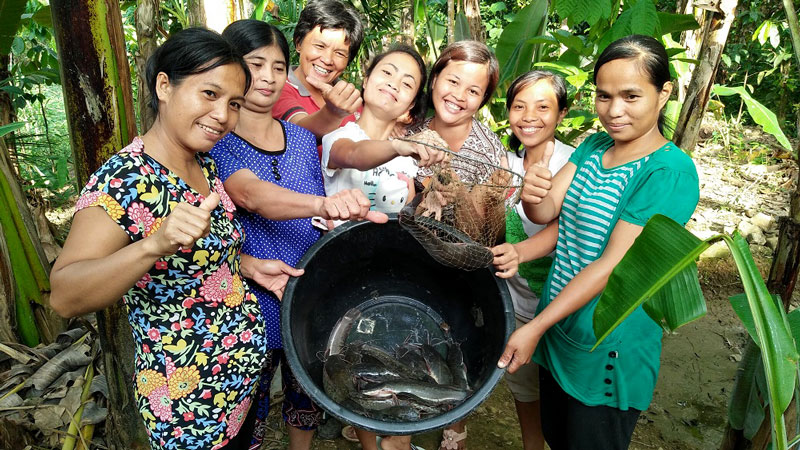
Photo credit: Yusman.