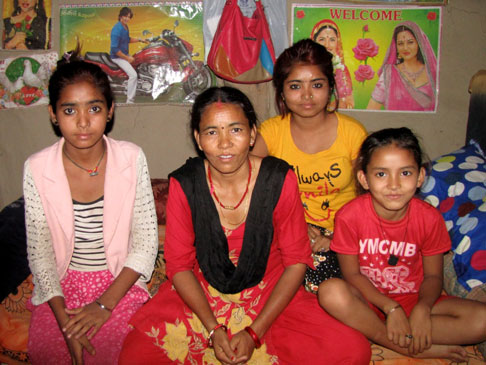
As a child, Bimala was the only female student at her primary school in Nepal. When she attended lower secondary school, she was one of only six girls out of the 70 students in her class. Then, at the end of year 8, Bimala was forced into marriage.
Bimala was no longer allowed to attend school and was confined to household duties. After she moved with her husband and four young children to India, he left her – with no income, no family and no citizenship.
Bimala's story is not uncommon. All over the world, girls and women face more barriers to a better life than boys and men, including limited access to money, education, and social and economic opportunities. To help end poverty in all its forms, it's vital to remove the barriers that girls and women face.
That's why Australian Lutheran World Service (ALWS) has established Women's Groups. These groups promote the meaningful social, political and economic participation of women. They promote women's leadership, increase financial literacy among women, and work to increase spending on household and family priorities. Without these groups, women are often excluded from financial services and decision-making.
Bimala is a great example of what can happen when women are given tailored empowerment opportunities. After attending a women's empowerment course, Bimala was supported by local partner Lutheran World Federation (LWF) Nepal to lead a Human Rights Group that advocates for the rights of people with disabilities. Bimala says:
"I have gone back to study … I am happy and proud that I never gave up! I want to raise the voice of the needy people so that the government is aware of their needs and they can do the right thing to meet them."
ALWS is supported by the Australian Government through the Australian NGO Cooperation Program (ANCP).