- NGO: Plan International Australia
- Sector: Water and sanitation
- Country: Laos
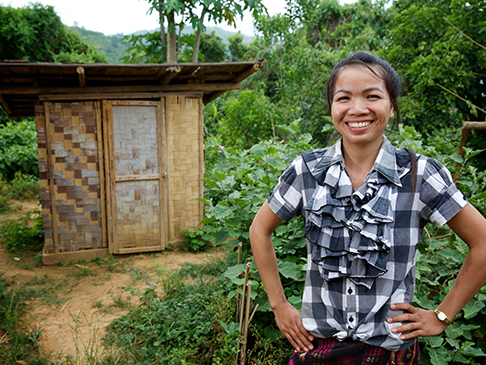
Can you remember the first time you saw a toilet? Noy does. "I felt confused, and shocked. I thought, where does it go?!" Noy lives in a remote village in Laos, up until three years ago the village did not have toilets. The health of this community was poor - people got sick regularly, suffering from diarrhoea. Noy remembers this sickness well. "I got sick and vomited and had a terrible stomach ache."
Australian NGO, Plan International and partner government staff met with the whole community and mapped out all the places where people defecate in and around the village, and showed how it can end up in the water they drink and wash in. This is part of a participatory community mobilisation approach called Community Led Total Sanitation. Community members attended sessions on the importance of basic hygiene practices like hand-washing before eating and defecating in the toilet (rather than in the open field or in the river).
For Noy, incorporating daily changes like washing her hands every day, and using the toilet into her routine wasn't hard. "It was easy - because it's about life," she says. "I want my village to be healthy, and to stay healthy."
Noy's toilet has become her pride and joy, "Before we had the toilet we had to go out in the open, sometimes at night. We'd be scared of the dogs and the dark." Now she has a safe and private place.
The Plan International Australian project is jointly funded by the DFAT Australian NGO Cooperation Program (ANCP). The project works across four Districts in Laos and assist with toilets for community members and schools.
In 2014-15 through the ANCP, Australian aid supported 17 NGOs to deliver 52 water, sanitation and hygiene projects in 23 countries. Some 800,000 people benefited from this assistance.
For more on the importance of sanitation, see the recent article by the Australian Minister for International Development and the Pacific