
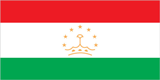
General
Tajikistan is the smallest of the five central Asian states, with a total land area of 143,099 square kilometres – approximately twice the size of Tasmania.
Ninety-three per cent of its territory is mountainous and it ranks as the world’s second most mountainous country. It borders Uzbekistan, the Kyrgyz Republic, China and Afghanistan.
With more than half its population of 10.7 million under the age of 25, Tajikistan has the youngest demographic profile in Central Asia. According to its most recent census, 86.1 per cent of the population was ethnically Tajik and 11.3 per cent ethnically Uzbek. Official statistics estimate that almost 98 per cent of the population is Muslim, predominantly Sunni, with an Ismaili Shia minority concentrated in the Pamir region and a small Russian Orthodox community.
Political overview
Tajikistan is a highly centralised presidential republic in which the President serves as both head of state and head of government. Since 1999, the Supreme Assembly has comprised a 63-seat Assembly of Representatives and a 33-seat National Assembly.
The area that comprises modern-day Tajikistan officially existed as the Tajik Soviet Socialist Republic from 1929 until it declared independence in 1991. The country experienced a civil war between 1992 and 1997 that caused significant loss of life, widespread damage to infrastructure and livelihoods, and the displacement of more than one million people. The conflict ended following the signing of a United Nations-supported peace agreement in 1997.
Emomali Rahmon has been President since 1994 and Tajikistan's dominant political figure since 1993, making him the longest-serving head of state in the former countries of the Soviet Union. In December 2015, President Emomali Rahmon was legally designated the 'Founder of Peace and National Unity, Leader of the Nation', a status further strengthened by a 2016 constitutional referendum that granted him lifelong legal immunity and exempted him from presidential term limits. His eldest son, Rustam Emomali, serves concurrently as the Mayor of Dushanbe and the Chairman of the National Assembly (the upper house of parliament), legally positioning him as the first in line of succession to the presidency.
International observers have assessed Tajikistan's political freedoms as having declined significantly over the past two decades, citing restrictions on opposition activity, independent media and civil society. Tajikistan’s Freedom in the World score fell from 30/100 in 2005 to 5/100 in 2026. Its parliamentary elections on 2 March 2025 saw the ruling People's Democratic Party of Tajikistan retain power amid criticism from international observers regarding the absence of meaningful opposition and shortcomings in democratic standards.
The Islamic Renaissance of Tajikistan (IRPT), formerly the country's main opposition party, was banned in 2015. Many opposition figures continue their activities from exile, including through the National Alliance of Tajikistan (NAT).
Tajikistan is a member of the Collective Security Treaty Organization, the Shanghai Cooperation Organization, the Commonwealth of Independent States, the Economic Cooperation Organization and the Organization of Islamic Cooperation.
Economic overview
Tajikistan’s GDP in 2025 was USD $17.7 billion and grew by 8.4 per cent. Its principal exports were precious metals, mineral ores, other base metals and aluminium, with smaller exports of agricultural products including fruit and nuts. China and Kazakhstan are Tajikistan's top two export destinations. Tajikistan’s economy relies heavily on personal remittances from citizens overseas, particularly Russia, accounting for over half of GDP, the highest in the world in 2025.
While Tajikistan's growth rate has averaged above 7.1 per cent across the last decade, the country has the lowest GDP per capita in Central Asia at USD 1,637. The national poverty rate was 19.9 per cent in 2024.
Australia's relationship with Tajikistan
Australia and Tajikistan have a small economic relationship. Two-way goods and services trade was worth $2.2 million in 2025. Australia's exports to Tajikistan totalled $1.1 million, with recreational travel services accounting for the largest share. Imports from Tajikistan were also valued at $1.1 million and consisted primarily of mechanical equipment.
Australia established diplomatic relations with Tajikistan in December 1991. The Australian Ambassador to the Russian Federation holds non-resident accreditation to Tajikistan. Tajikistan is yet to establish diplomatic representation to Australia.