
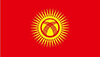
General
The Kyrgyz Republic is a landlocked, mountainous country bordering Kazakhstan, Uzbekistan, Tajikistan and China. It covers 199,951 square kilometres and has a young and largely rural population of over 7 million, around one-third of whom are under 15. Bishkek is the capital and largest city.
Ethnic Kyrgyz make up approximately 78 per cent of the population, alongside Uzbek, Russian and other minority communities. Approximately 90 per cent of the population is Muslim, predominantly Sunni, while 7 per cent is Christian. Nomadic heritage remains an influence on Kyrgyz culture and traditions.
Much of the territory of the present-day Kyrgyz Republic was annexed by the Russian Empire in 1876. It became a Soviet republic in 1926 and gained independence following the dissolution of the Soviet Union in 1991. Russian remains an official language in Kyrgyzstan, with Kyrgyz as the state language.
The Kyrgyz Republic maintains close political, economic and security ties with Russia, while also developing economic ties with China and closer cooperation with its Central Asian neighbours. In March 2025, it signed the Khujand Treaty with Tajikistan and Uzbekistan, resolving longstanding border disputes in the Ferghana Valley and defining the junction of the three countries' borders.
The Kyrgyz Republic is a member of the United Nations, the Commonwealth of Independent States (CIS), the Eurasian Economic Union (EAEU), the Collective Security Treaty Organization (CSTO), the Shanghai Cooperation Organisation (SCO), the Organization of Turkic States (OTS) and the Organisation of Islamic Cooperation (OIC).
Political Overview
The Kyrgyz Republic has historically had a comparatively open and contested political environment, distinguishing it from other Central Asian states. It has experienced repeated political upheaval following disputed elections, including the removal of presidents in 2005, 2010 and 2020, but also achieved Central Asia's first and only peaceful transfer of power between democratically elected presidents in 2017. Protests following the disputed October 2020 parliamentary elections created a political vacuum in which former parliamentarian, Sadyr Zhaparov, rapidly became prime minister and acting president.
Zhaparov won the presidency in January 2021 and a constitutional referendum later that year replaced the parliamentary system with a presidential model, strengthening the executive and reducing the role of parliament. The concentration of power in the presidency has coincided with a broader deterioration in democratic freedoms, including the jailing of journalists and prominent opposition figures. The introduction of "foreign representatives" and "false information" laws has drawn comparisons with Russian legislation and contributed to NGO closures and increased pressure on civil society and independent media.
Economic Overview
The Kyrgyz Republic's GDP reached USD 22.6 billion in 2025. The services sector accounts for the largest share of the Kyrgyz Republic's economy, supported by trade, tourism and transport. Industry centres on construction and mining, with gold the country's largest export. Other exports include minerals and agricultural products.
The Kyrgyz Republic has one of Central Asia's smaller economies, generally ranking fourth or fifth among the region's five states by nominal GDP, but has recorded strong growth in recent years. Some observers attribute part of this growth to increased trade and re-exports to Russia connected to the imposition of international sanctions following Russia's invasion of Ukraine. Remittances from Kyrgyz workers overseas, particularly Russia, remain an important source of national income (17.4 per cent of GDP in 2024). Approximately 25 per cent of the population was living below the national poverty line in 2025.
Australia's Relationship with the Kyrgyz Republic
Australia and the Kyrgyz Republic have a modest economic relationship. Two-way goods and services trade with the Kyrgyz Republic in 2025 was worth $11.1 million. Australia's exports to the Kyrgyz Republic were $5 million and imports from the Kyrgyz Republic were $6.1 million.
Australia established diplomatic relations with the Kyrgyz Republic in December 1991. The Australian Ambassador to the Russian Federation holds non-resident accreditation to the Kyrgyz Republic. The Kyrgyz Republic's Ambassador to Japan holds non-resident accreditation to Australia.