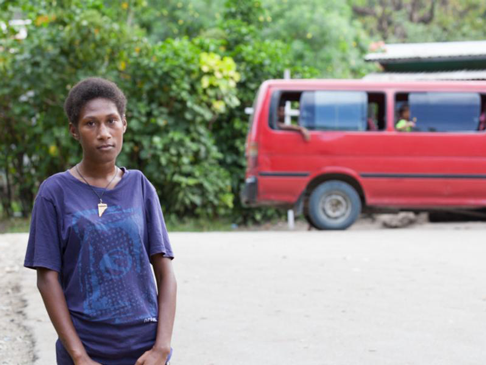
Across the world cities continue to grow as people seek employment and opportunities. The most vulnerable population in these cities is often adolescent girls who face harassment, and the risk of physical and sexual violence in public spaces.
In Honiara, informal settlements have grown rapidly due to more and more people moving to the city from rural areas. Around 40% of Honiara's city population is made up of informal settlement households. Girls and young women face particular challenges in informal settlements including high rates of physical and/or sexual abuse by men drinking at roadside bars.
Plan International Australia's Safer Cities for Girls project in Honiara, Solomon Islands, was launched with support from the Australian NGO Cooperation Program (ANCP). The project is designed to influence decision makers, communities and families to make cities safer for and more inclusive of girls. It also engages girls and boys to be active citizens and agents of change in their own cities.
In its early stages, the project has taken girls and decision makers on 'Safety Walks' through areas girls identify as feeling unsafe.
"Sometimes when I'm going in the towns and come back late this place would be unsafe for me." Neslyn, 20, says of the local bus stop near her community.
The project asks girls to identify what would help them feel safe in their cities. "Street lights." "Police should do patrols." "Respect girls." Neslyn and her sister Monica, 19, told the local team.
This ground-breaking initiative is designed to build girls confidence to speak out on issues that impact them, help them understand their rights and address gender inequality not only through supporting girls and boys, but by working with governments, transit authorities and communities to create safer spaces. Plan International's Global Safer Cities for Girls program is achieving similar success in many countries around the world.